In our previous post, we looked at how Salesforce Customer 360 and Agentic AI are bridging the gap in modern CX. But what does that look like on a Tuesday afternoon when your support queue is at its peak? It looks like a transformation from frantic troubleshooting to seamless, autonomous resolution.
Introduction
The Old Way vs. The Agentic Way
Before, a customer with a shipping delay had to wait for a human agent to manually check the warehouse system, update the CRM, and email the customer back.
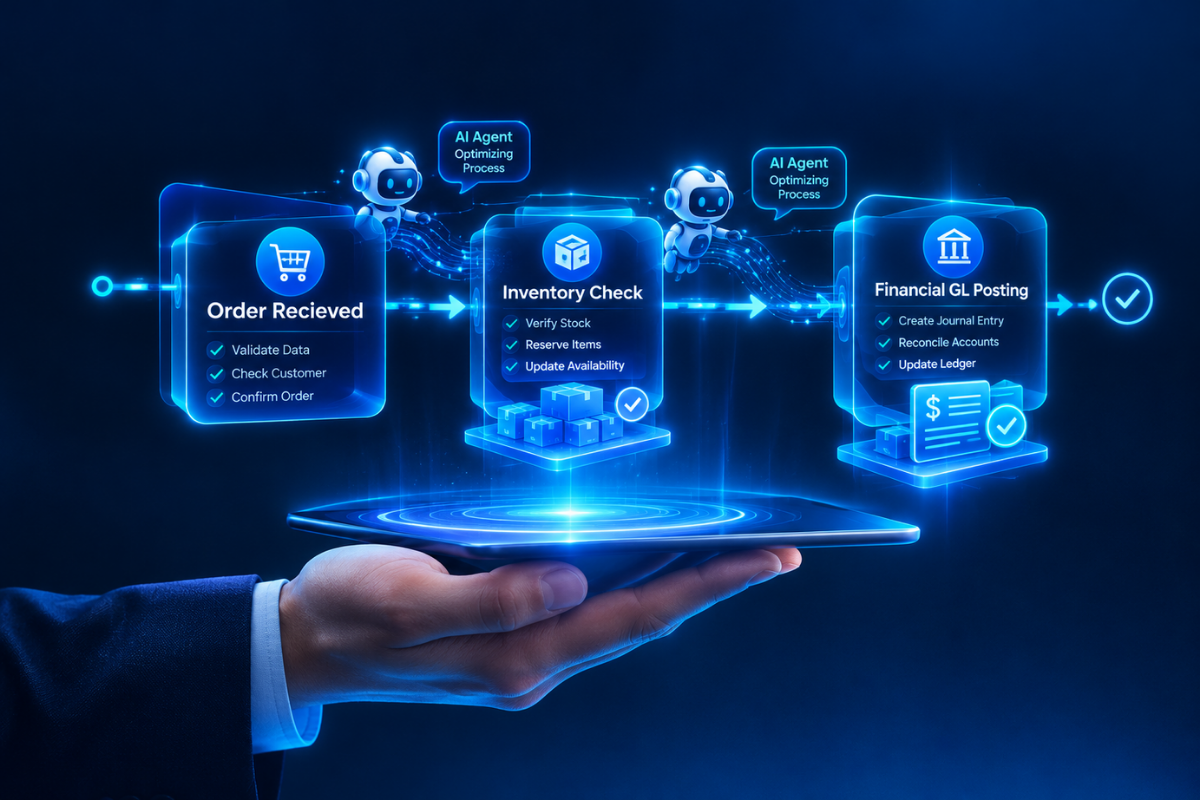
- The Trigger: An AI agent detects a delay in the supply chain data.
- The Decision: It cross-references the Customer 360 profile to see if the customer is a "Premier Member."
The Action: It autonomously offers a discount code for the next purchase and sends a personalized apology - all before the customer even realizes there’s a delay.
3 High-Impact Use Cases for Your Business
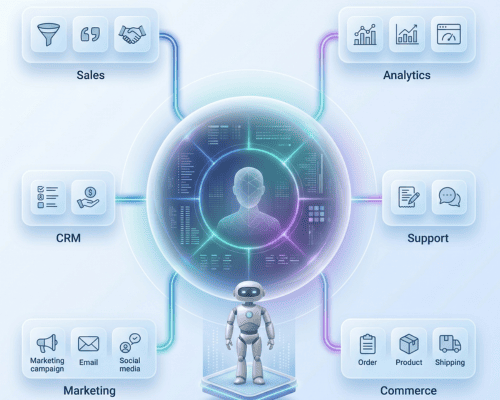
- Sales: The Always-On Lead Qualifier Instead of lead forms sitting in an inbox, an AI agent engages prospects in real-time via Slack or chat, using unified data to qualify them and book a meeting directly on a rep's calendar.
- Marketing: Hyper-Personalization at Scale Gone are the days of "Batch and Blast." AI agents analyze real-time behavior to trigger a specific offer the moment a customer’s interest peaks.
- IT & Ops: Proactive System Health AI agents monitor your internal integrations. If a data flow between Commerce and Service breaks, the agent identifies the root cause and alerts the team with a suggested fix.
In 2026, the competitive advantage isn't just who has the best data, but who has the most connected data. A 360-degree view is no longer a luxury; it’s the minimum requirement for survival.
The Operational Shift: Moving from "Assistant" to "Agent"
In the past, AI in the CRM was advisory. It could summarize a case or suggest a reply, but the human still had to click the buttons. In 2026, the shift to Agentic AI means moving from a "Copilot" to an "Autopilot" for well-defined tasks.
| Feature | Traditional CRM Workflow | Agentic AI Workflow |
|---|---|---|
Trigger | Reactive (User logs in/clicks) | Proactive (Agent observes data changes) |
Logic | Static, rule-based | Dynamic, goal-oriented reasoning |
Human Role | Data entry & navigation | Strategy & high-level approval |
Output | Manual, sequential steps | Autonomous, multi-step execution |
Instead of a service rep spending 15 minutes navigating screens to rebook a flight, an AI agent detects the delay, identifies the customer’s status via Customer 360, and presents a pre-filled "Approve Rebooking" card directly in Slack. The agent does the CRM heavy lifting; the human simply makes the final call.
5 Pillars of AI Readiness: How to Start
Implementing a unified, agentic ecosystem is a journey. Before touching the software, businesses must focus on these five pillars of readiness:
- Define Clear Outcomes: Don't just "implement AI." Define a goal, such as "Reduce case resolution time by 20%."
- Prioritize Data Hygiene: Agentic AI is only as good as the data it reasons with. Purge duplicates to ensure the AI isn't learning from "bad" data.
- Establish Governance: Define the "guardrails." Which tasks are safe for autonomous execution, and which require a human in the loop?
- Leverage "Headless" Flexibility: Use tools to bring AI actions into the apps your team already uses, like Slack or Teams.
Start Small, Scale Fast: Begin with low-risk tasks (like lead scoring) before moving into complex, customer-facing autonomous resolutions.
Implementing the Future
Transitioning to this model isn't just about the software - it's about the strategy behind the data. At Hajana Technologies, we don't just "install" Salesforce; we build the outbound systems that turn your data into a competitive advantage. We help you move beyond the "AI hype" into actual Agentic Execution.
Final Thought
Customer experience is no longer just about service - it’s about connection, speed, and intelligence. When your data is unified and powered by agentic AI, your business shifts from reacting to customers to truly understanding and anticipating their needs.
By breaking down silos and embracing a single source of truth, we empower your teams to stop delivering excuses and start delivering solutions.
The goal is simple: Instead of saying “we can’t do that,” you start saying “it’s already taken care of.”
Contact us today to start your journey toward a unified, intelligent business.
Frequently Asked Questions
What is the difference between an AI "Assistant" and an "Agent"?
An AI Assistant (like a traditional chatbot) is reactive; it waits for you to ask a question and then provides information or a suggestion. An AI Agent is proactive and autonomous. It is given a goal (e.g., "Resolve this shipping delay") and can independently navigate systems, make decisions, and execute multiple steps to achieve that goal without a human clicking every button.
Does Salesforce Customer 360 replace my existing databases?
Not necessarily. Customer 360 acts as a unified application layer. It connects your existing data sources - whether they are in AWS, Snowflake, or other legacy systems - and creates a single, real-time view. It allows your teams to see all that data in one place without needing to move every record into a new database.
Is Agentic AI safe for customer-facing interactions?
Yes, provided you have established proper Guardrails and Governance. In a professional implementation, you define "Confidence Scores." If the AI is 95% sure of a resolution, it acts; if it falls below that threshold, it automatically hands the case to a human. Furthermore, Salesforce’s "Einstein Trust Layer" ensures that your sensitive customer data is never used to train public AI models.
How long does it take to see results from a Customer 360 implementation?
While a full enterprise-wide overhaul is a journey, most businesses see immediate "Quick Wins" within 30 to 90 days. By starting with a specific department (like Service) or a high-frequency task (like Lead Qualification), you can prove ROI before scaling to the rest of the organization.
How do humans and AI agents work together in Slack?
Think of Slack as the "Digital HQ." AI agents operate as members of your channels. You can @mention an agent to ask for a customer summary, or an agent can proactively post a "Decision Card" in a channel when it needs a human to approve a high-value refund or a complex contract change.
Why should I work with a partner like Hajana Technologies instead of doing it myself?
Setting up the software is only 20% of the battle. The other 80% is strategy and data architecture. We help you identify the right use cases, clean your data, and build the "Outbound Systems" that ensure your AI agents are actually driving qualified conversations and revenue, rather than just answering basic questions.
Free Consultation
Ready to Transform?
Meet with an expert and start your journey today.