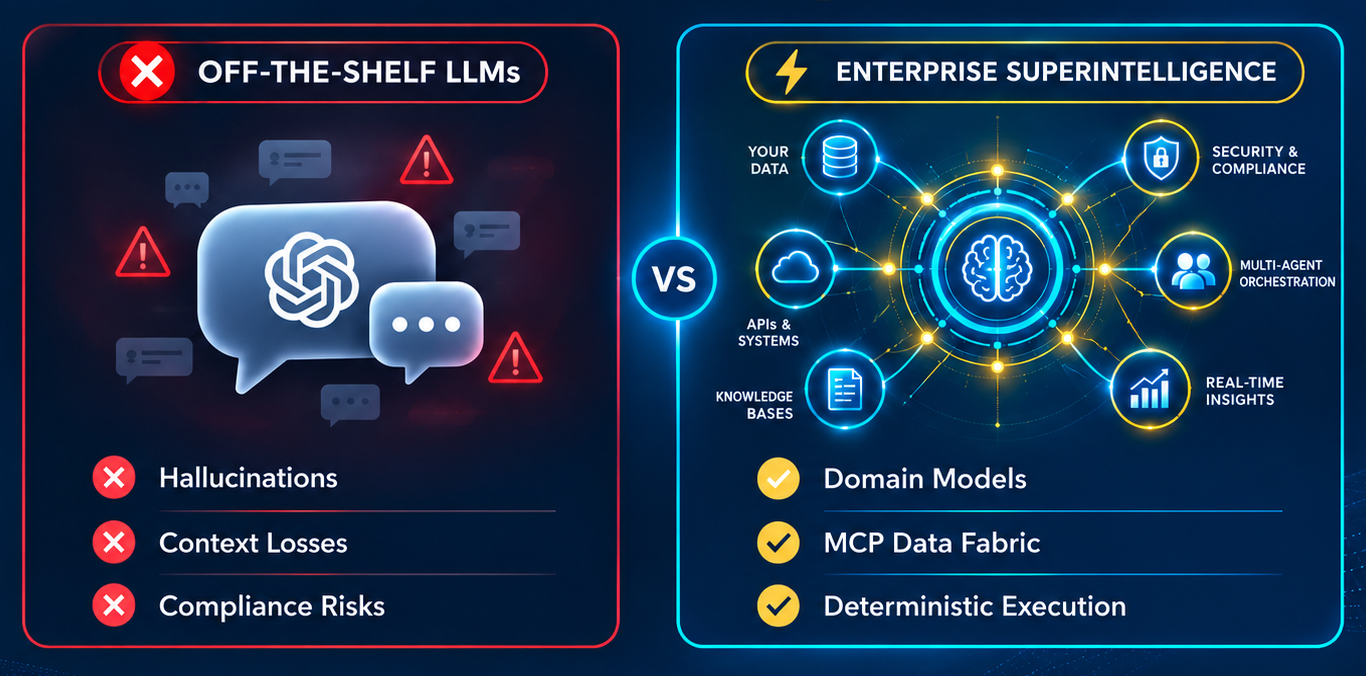
There is a growing disconnect in enterprise AI strategies. Tech headlines trumpet the impending arrival of Artificial General Intelligence (AGI) and superintelligence, while corporate IT departments struggle to get basic Large Language Models (LLMs) to accurately route customer tickets, parse vendor invoices, or forecast quarterly demand.
Why does this gap exist?
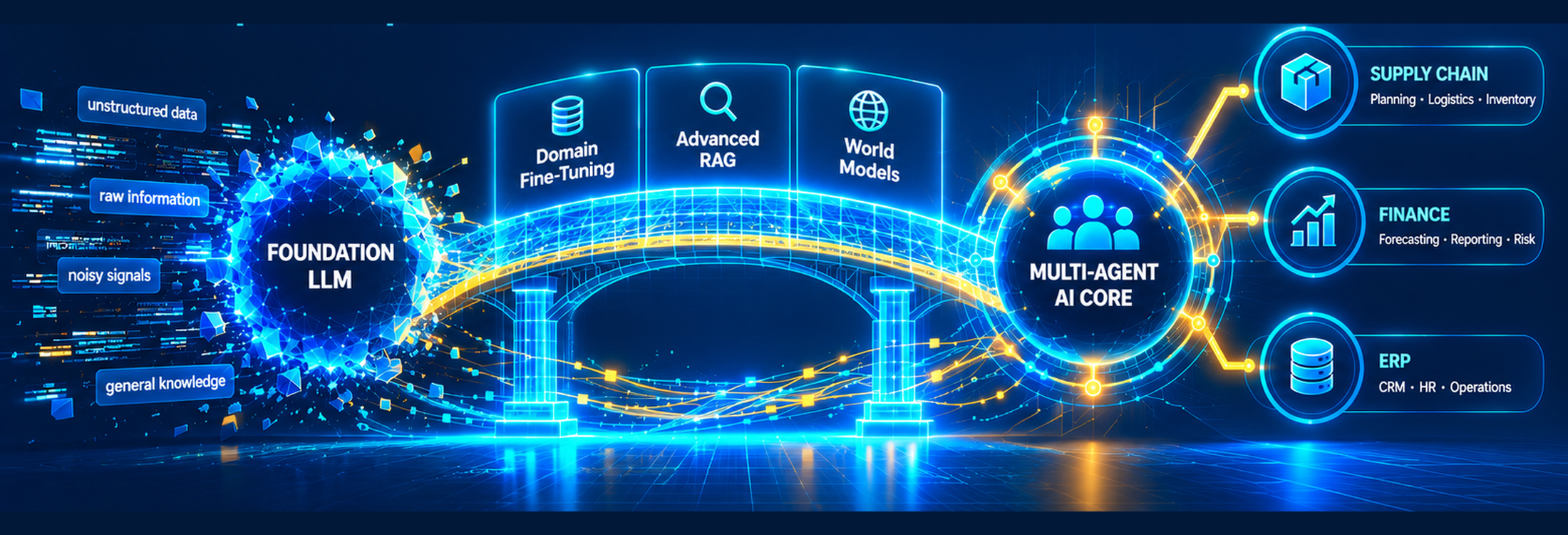
Because broad, general-purpose language models were engineered for broad human discourse - not for the precision, zero-trust security, and deterministic logic required by global supply chains, financial ledgers, and revenue operations. When applied to complex enterprise environments without proper domain anchoring, off-the-shelf models produce hallucinations, context fragmentation, and unacceptable operational risk.
Furthermore, as technical teams strive to innovate, they often hit a classic compliance dilemma: the need for experimental freedom versus strict corporate and regulatory governance. To bridge the gap toward true enterprise superintelligence, business and technology leaders must stop treating compliance as an afterthought and instead anchor their AI evolution across core architectural and governance pillars. For a deeper look into why traditional record management architectures are giving way to autonomous execution, explore our analysis on The Death of Static CRM/ERP: Why Agentic AI is the New Enterprise Core.