DMAIC Meets Salesforce Agentforce: A 5-Phase Guide to Automating the Revenue Engine
HT
Hajana Technologies
November 5, 2026
8 min read
Salesforce Agentforce represents a monumental shift in enterprise GTM strategy. By replacing static rules-based flows with autonomous AI agents capable of reasoning, executing actions, and engaging prospects across Sales Cloud and Service Cloud, revenue leaders finally have the tool needed to scale operations exponentially.
However, deploying autonomous agents into an unoptimized Salesforce instance is a high-risk gamble.
When autonomous agents inherit legacy validation bypasses, chaotic lead routing, and dirty CRM telemetry, they do not optimize revenue - they scale operational chaos. They fire incorrect triggers, misinterpret customer intent, and burn through API limits while confusing your buyers.
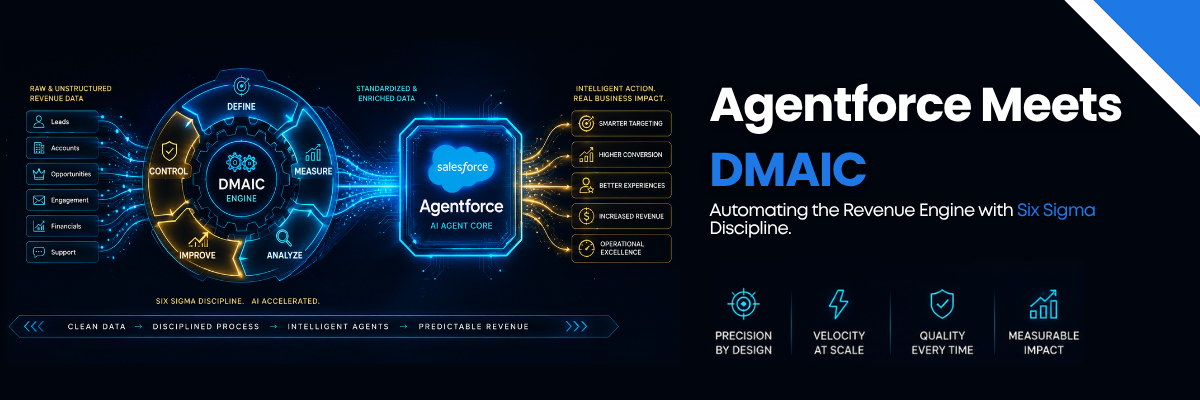
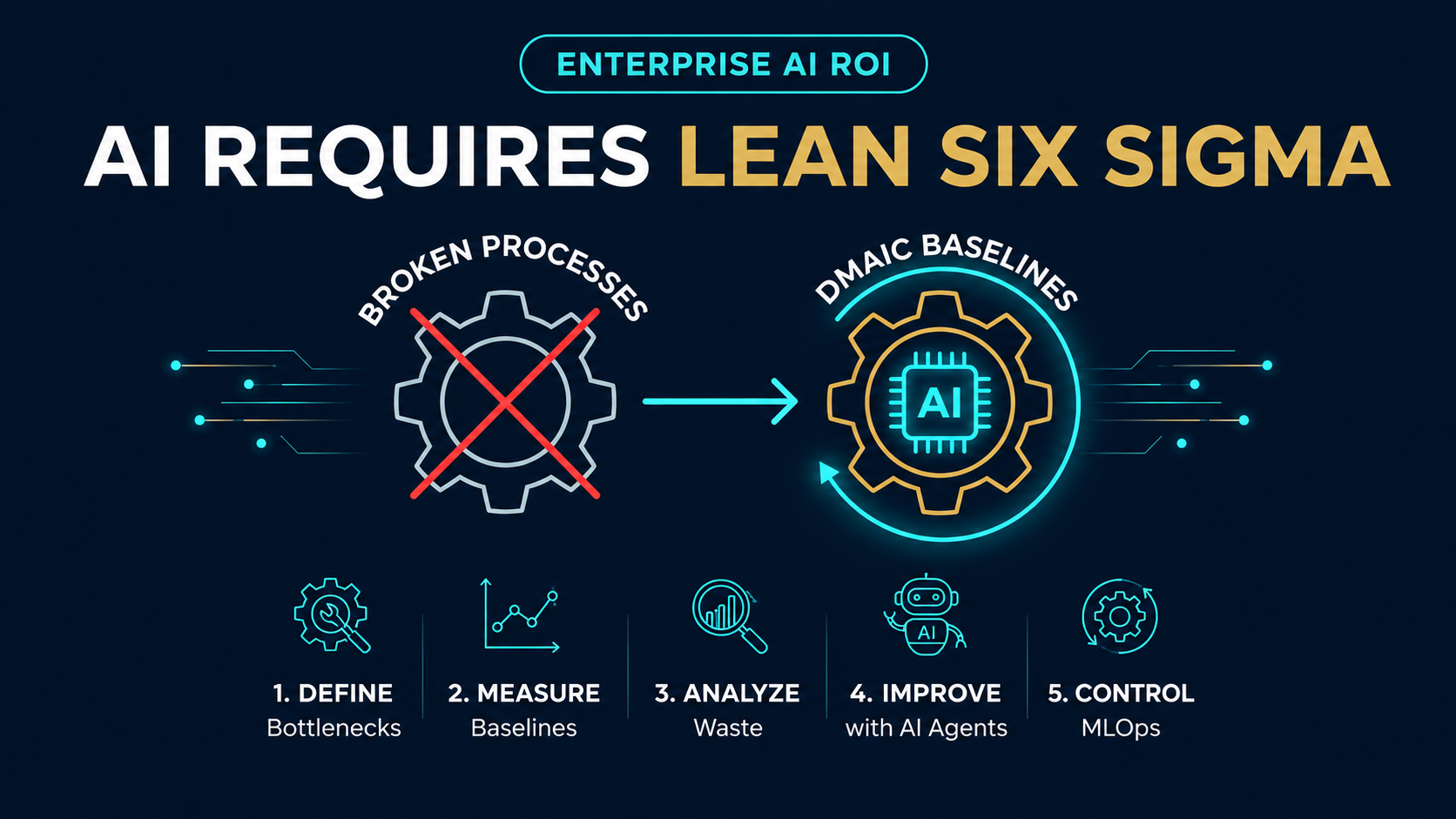
To transform Salesforce Agentforce from an unpredictable AI pilot into a deterministic revenue engine, GTM leaders must merge artificial intelligence with a proven continuous improvement methodology: Lean Six Sigma's DMAIC (Define, Measure, Analyze, Improve, Control) framework. Structuring process inputs and eliminating variance prior to technological deployment is essential for driving operational excellence.
The Architecture: DMAIC-Driven Agentforce Deployment
Deploying Agentforce requires treat AI actions as industrial process steps. Every prompt, database query, and automated outbound touchpoint must operate within strict variance controls.
DMAIC-DRIVEN SALESFORCE AGENTFORCE DEPLOYMENT
1. DEFINE
Map GTM Value Stream & Agent Scope (Sales/Service Cloud)
2. MEASURE
Establish Baseline Telemetry & Error Rates in Data Cloud
3. ANALYZE
Eliminate Pipeline Waste & Enforce Data Protocols (MCP)
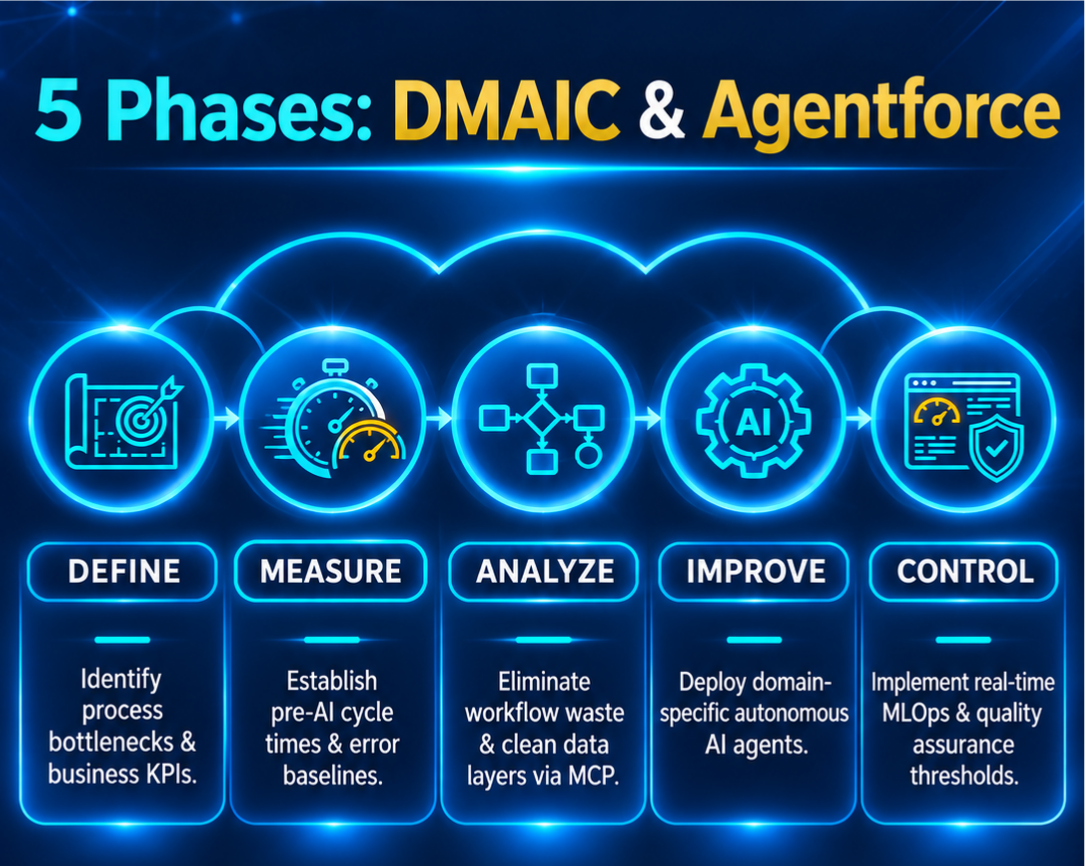
Here is how revenue operations and Black Belts can systematically engineer an Agentforce deployment across five structured phases.
Phase 1: DEFINE - Scoping the Revenue Value Stream
Before opening Salesforce Setup or defining Agent Topics, map the end-to-end revenue value stream. Identify where human account executives (AEs) and customer service reps suffer from operational friction.
Execution Steps:
Pinpoint High-Friction Touchpoints: Identify high-volume, low-variability tasks (e.g., inbound lead qualification, meeting rescheduling, Tier-1 case resolution, or post-call CRM logging).
Define Business Critical KPIs: Set concrete target metrics such as Lead-to-Opportunity Conversion Velocity, Mean Time to Resolution (MTTR), or Sales Rep Capacity Utilization.
Establish Agent Boundaries: Define strict scope limits for the autonomous agent. Determine exactly where Agentforce's execution ends and where a human rep takes over.
You cannot evaluate the ROI of Agentforce without accurate pre-deployment process metrics. In this phase, utilize Salesforce Data Cloud and CRM analytics to quantify your existing process variance.
Key Metrics to Baseline:
Cycle Time: What is the average time between an inbound lead form fill and the first touchpoint?
Defect Rate: What percentage of opportunities lack required BANT (Budget, Authority, Need, Timing) criteria or contain duplicate contact records?
Cost Per Action: What is the loaded labor cost of a human SDR qualifying an inbound account versus resolving a service inquiry?
Black Belt Tip: Use Data Cloud to aggregate historical interaction logs. Establishing baseline error rates prior to agent deployment ensures you can scientifically prove Agentforce's yield delta post-launch.
Phase 3: ANALYZE - Eliminating Waste & Cleaning Data Layers
Agentforce relies on vector embeddings, RAG (Retrieval-Augmented Generation), and real-time CRM state data to make reasoning decisions. If your underlying Salesforce data is fragmented or unstandardized, the agent's Atlas Reasoning Engine will fail or hallucinate.
Execution Steps:
Strip Non-Value-Added Steps: Remove redundant manual approvals, obsolete custom fields, and conflicting legacy process builder flows.
Standardize Interaction Protocols: Ensure Agentforce accesses clean enterprise context across external databases by implementing open standards such as the Model Context Protocol (MCP). Standardizing communication between Salesforce and external data fabrics prevents retrieval latency and ensures zero-trust security.
With a lean, structured process and clean telemetry layers in place, you can configure Agentforce within Salesforce Sales Cloud or Service Cloud.
Trigger/Intent
Flow/Apex/MCP
Atlas Reasoning
Customer Touch
Action Output
Topic Matching
Execution Steps:
Define Topics & Intent Classification: Group agent responsibilities into clear Topics (e.g., Inbound Lead Qualification, Contract Renewal Management, Case Escalation).
Build Precision Actions: Link Agentforce Topics to deterministic Salesforce assets - such as Apex classes, Flow Builder workflows, or external API endpoints via MCP.
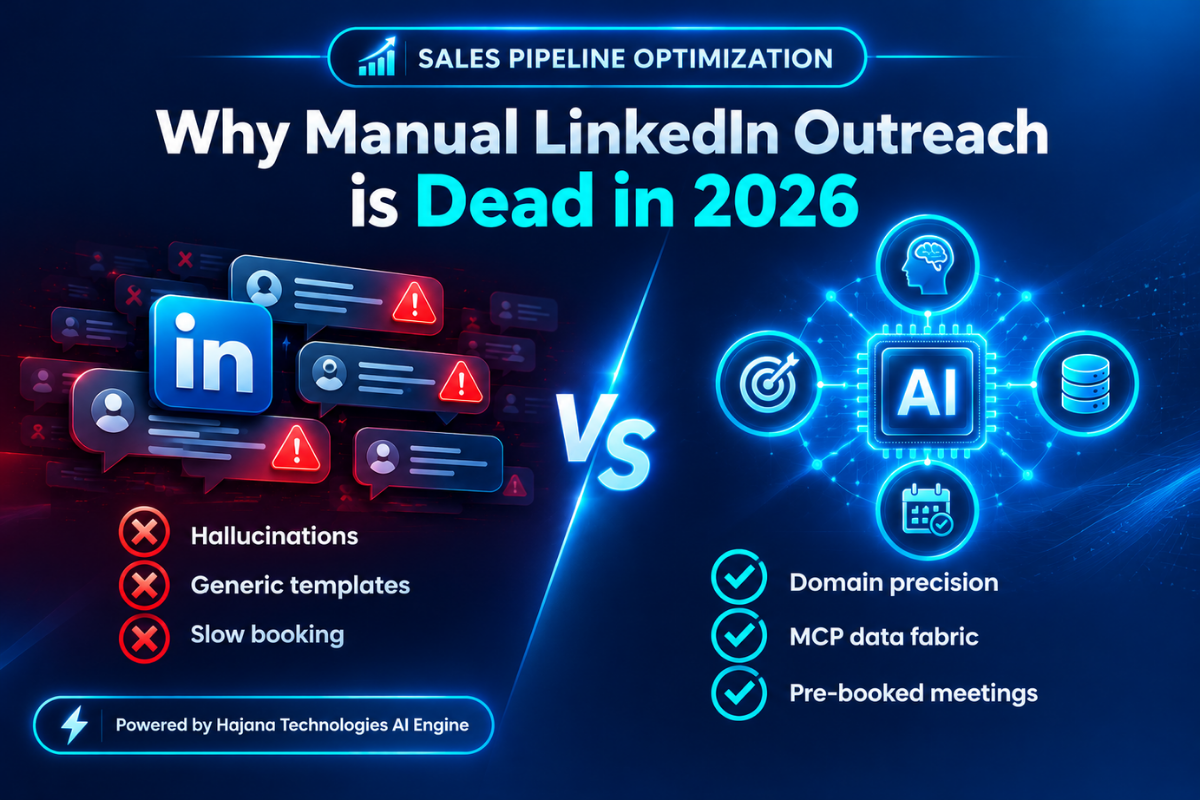
Replace Manual Outreach: Configure Agentforce to autonomously engage prospects, answer technical queries using vector search, and directly update opportunity stages. To see how autonomous agent coordination replaces manual outreach bottlenecks, read our analysis on stopping hours spent on manual outreach.
Phase 5: CONTROL - Implementing Guardrails & MLOps
Autonomous agents require continuous, real-time process monitoring. Phase 5 enforces statistical process control over Agentforce to eliminate model drift, prevent unauthorized field updates, and guarantee compliance.
Execution Steps:
Set Confidence Thresholds: Configure Agentforce to trigger a Human-in-the-Loop (HITL) handoff whenever intent evaluation falls below a predetermined confidence threshold (e.g., <85%).
Deploy Audit Logging: Log all Agentforce reasoning paths, action executions, and customer response sentiment into Salesforce Data Cloud for continuous auditability.
Monitor Quality Signals: Implement automated MLOps dashboards to track sentiment score changes, escalation frequencies, and conversion velocity in real time. For additional insights on how agentic intelligence provides a modern core for enterprise platforms, read Why Agentic AI is the New Enterprise Core.
Transform Your Revenue Engine with Hajana Technologies
Scaling Salesforce Agentforce from an isolated experiment into a high-yield revenue engine demands a synthesis of Lean Six Sigma discipline, deep CRM architecture knowledge, and advanced multi-agent engineering.
At Hajana Technologies, we assist CROs, VPs of Sales Ops, and enterprise architects in:
Conducting end-to-end GTM value stream mapping to eliminate process waste before deploying AI.
Building secure Data Cloud architectures and MCP protocols connecting Salesforce to enterprise systems.
Custom-engineering Salesforce Agentforce topics, custom actions, and real-time control guardrails.
Stop letting unmeasured workflows drag down your GTM efficiency. Partner with our systems engineering team at Hajana Technologies or reach out via Hajana Technologies Contact to engineer a predictable, agentic revenue engine today.
Conclusion
Salesforce Agentforce gives enterprises the power to scale customer interactions at unprecedented speeds. However, speed without operational control only leads to faster operational failure.
By executing Agentforce deployments through the structured lens of DMAIC - defining targets, measuring baselines, analyzing data waste, improving via autonomous actions, and controlling with strict guardrails - revenue leaders can build a GTM engine that delivers consistent, measurable growth.