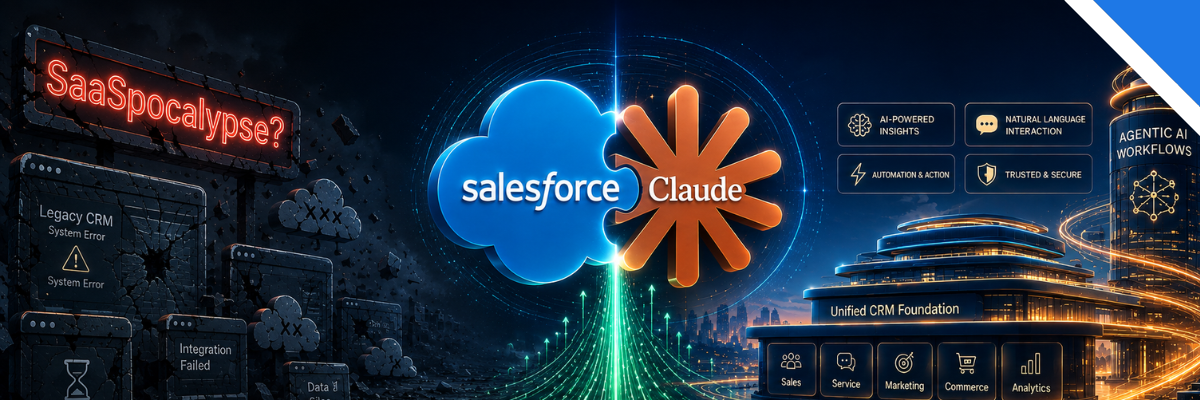
The Flaw in the ‘SaaSpocalypse’ Narrative
The "SaaSpocalypse" hypothesis fundamentally misunderstood what makes enterprise CRM platforms like Salesforce valuable.
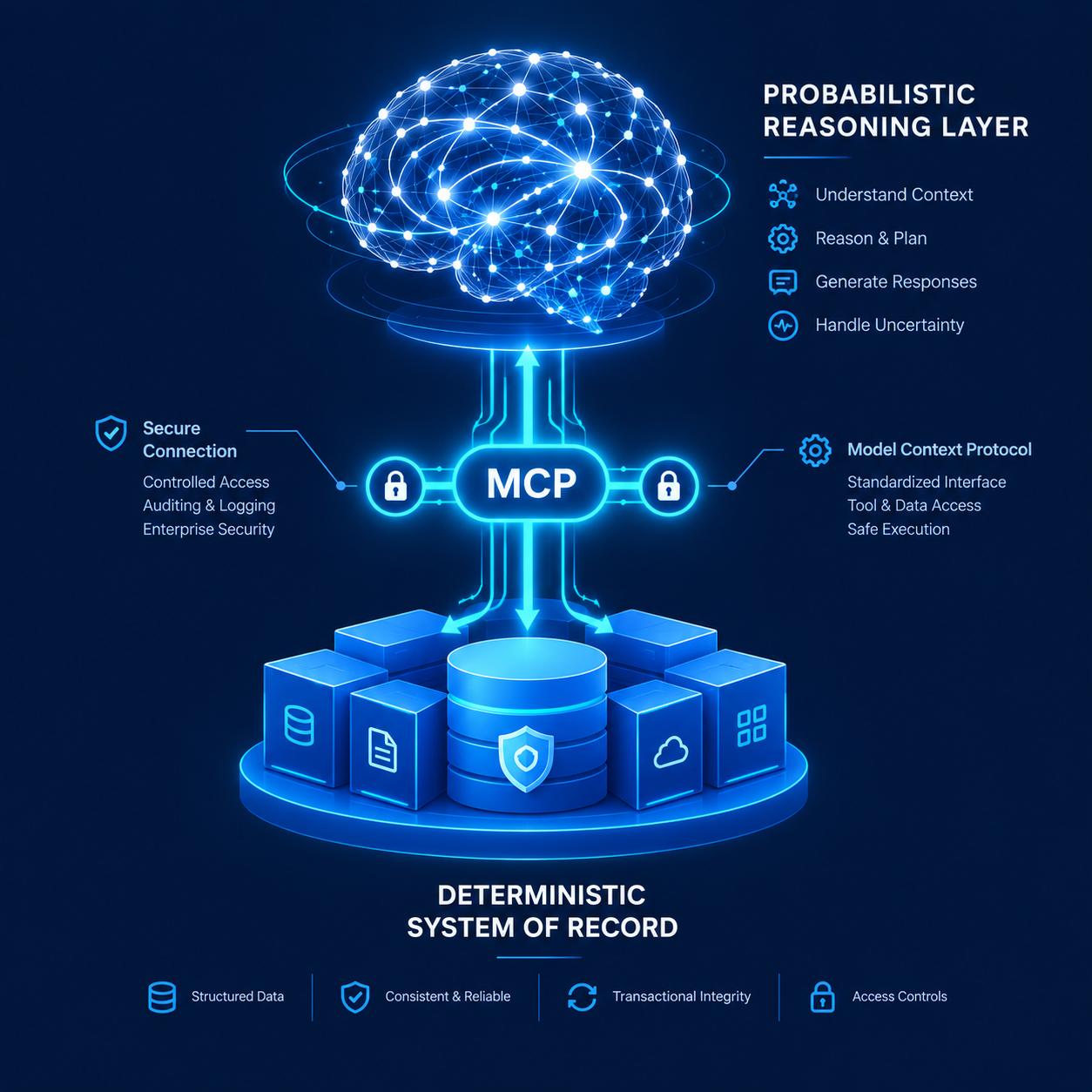
A CRM is not merely a collection of graphical user interface (GUI) screens, form fields, and navigation menus. The real value of an enterprise CRM lies in its underlying data architecture and business logic engine:
PROBABILISTIC REASONING
Anthropic Claude / Agentforce- 1Intent Understanding
- 2Context Synthesizing
- 3Dynamic Planning
- 4Natural Language Output
DETERMINISTIC SYSTEM OF RECORD
Salesforce Data Engine- 1Relational Data Models
- 2Granular Sharing & FLS
- 3Apex Trigger Pipelines
- 4Regulatory Audit Trails
Deterministic Execution:
A generative AI model is probabilistic - it predicts the most likely sequence of tokens or actions. However, financial records, sales pipelines, and compliance audit logs must be deterministic. You cannot allow an AI model to "hallucinate" an opportunity stage update, a revenue recognition calculation, or a legal contract approval. To understand how Anthropic's Claude reasoning capabilities operate at a foundational level, enterprise leaders must evaluate model traits against core data rules.
Complex Governance & Security Boundaries:
Large enterprises spend decades configuring fine-grained security policies: Field-Level Security (FLS), role-based record sharing, validation rules, and compliance boundaries. Re-building this governance layer from scratch inside a standalone AI app is mathematically and operationally unfeasible.
Execution Logic & Triggers:
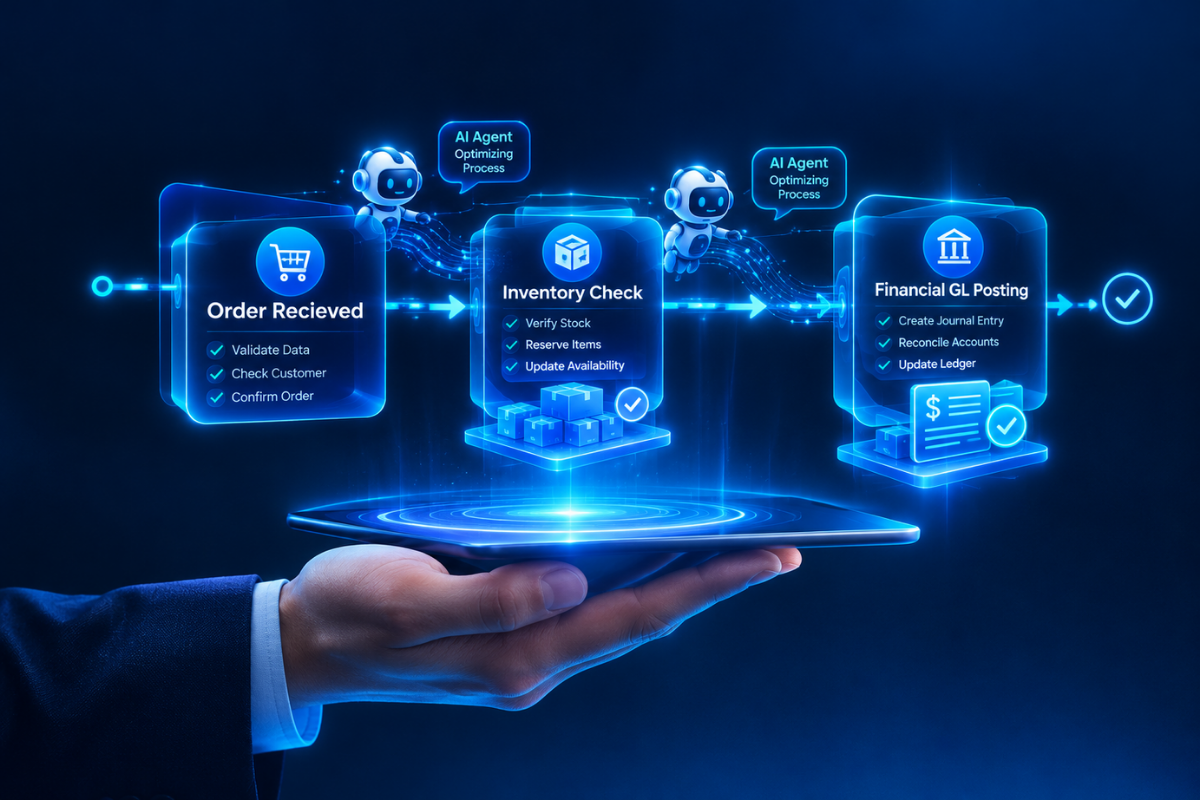
Updating an account status in a CRM isn't just changing a row in a database; it triggers a chain reaction of Apex code, Flow automations, financial ledger syncing, and downstream API calls.
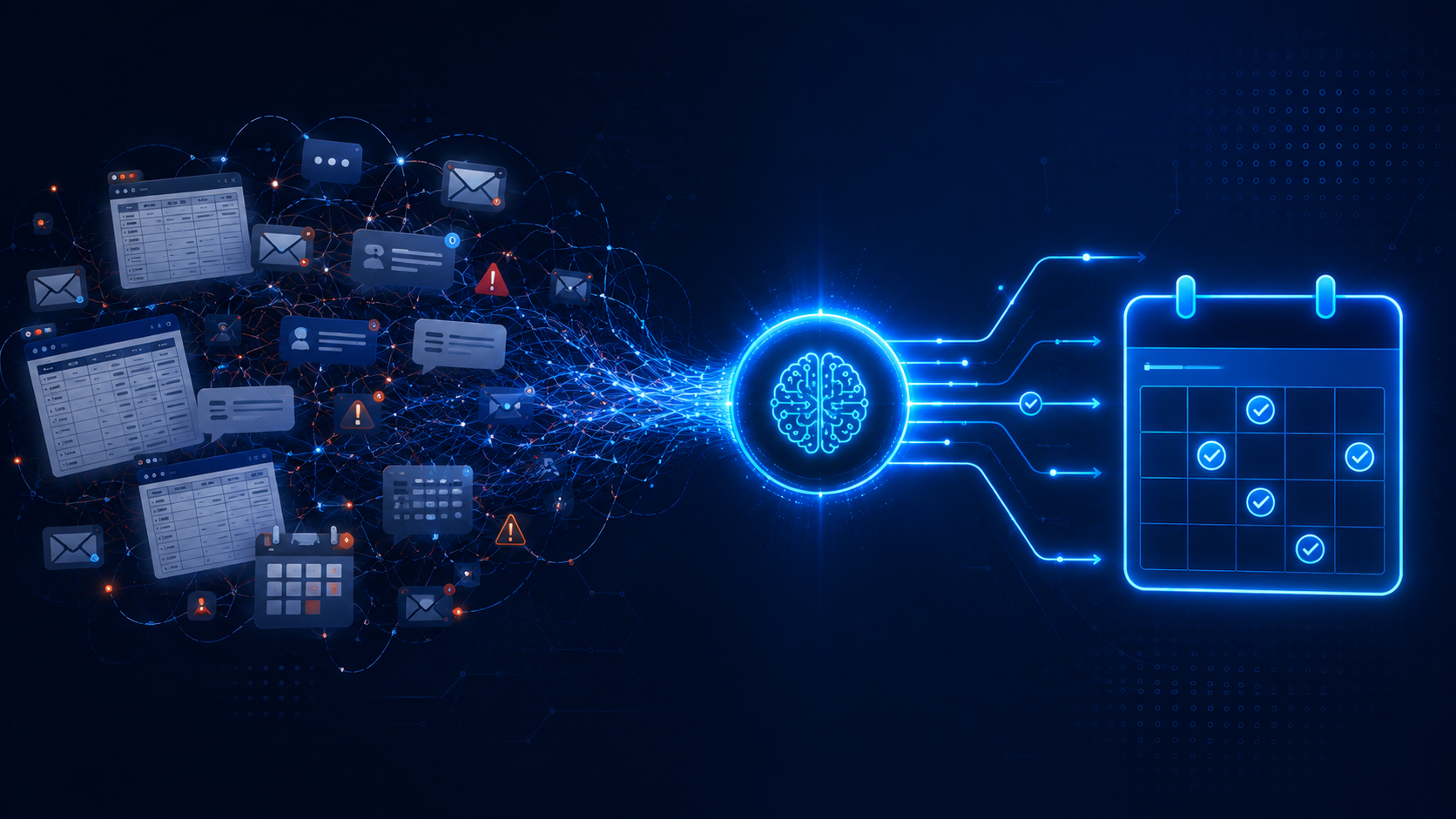
Removing the traditional UI screen does not destroy the CRM. It removes the friction of manual data entry while relying entirely on the CRM's deterministic engine to execute state changes safely.
Why Probabilistic + Deterministic = Unprecedented Enterprise Value

1. The Interface Decoupling (The "Invisible" CRM)
2. High-Trust Autonomy via MCP Governance
- A seller cannot accidentally query or update records they don't have explicit permission to view.
- All AI-generated write actions (dispatch PATCH) pass through existing validation rules and triggers.
- Compliance teams retain a 100% auditable log of every record modification made by an agent.
3. Monetization Shifts from Seats to Outcomes
The Strategic Imperative: Preparing Your Enterprise Strategy
If legacy platforms are evolving into head-less data engines powered by AI agents, how should enterprise technology leaders adapt their IT roadmap?
ENTERPRISE ADAPTATION ROADMAP
1. Cleanse Data & Object Models
2. Modernize Security & Sharing Boundaries
3. Shift to Bounded Agentic Workflows
1. Eliminate Data Debt & Over-Provisioned Permissions
In a manual UI environment, over-provisioned user permissions often go unnoticed because users only click where they are trained to click. In an agentic environment, an AI agent with access to an over-provisioned profile will index and reason over sensitive data across the entire org. Permission audits are no longer optional background maintenance - they are a prerequisite for AI safety.
2. Move from Task Automation to Process Orchestration
Rather than building isolated prompt templates or simple screen flows, map out end-to-end operational goals (e.g., "Automate Q3 Enterprise Pipeline Reconciliation"). Structure these workflows using clear read vs. write boundaries (dispatch_readonly vs. dispatch). For a deep dive into structuring goal-driven execution layers, read our architectural analysis on Autonomous Enterprise Agents: Goal Automation.
3. Establish Strategic Model Optionality
While Claudeforce tightly integrates Anthropic’s Claude, enterprise platforms are inherently multi-model. Architects must design an enterprise AI layer that allows switching or ensemble-routing between foundation models (Claude, Gemini, Llama) depending on latency, cost, and task complexity.
How Hajana Technologies Guides Enterprise AI Evolution
Navigating the transition from traditional SaaS workflows to agentic AI integration requires strategic clarity, technical rigor, and deep architectural experience.
As an enterprise AI development company, Hajana Technologies helps organizations bridge the gap between legacy systems of record and frontier AI models through our dedicated advisory and engineering practices:
HAJANA AI STRATEGY & ADVISORY
AI Readiness & Security Audit
(Permission Scoping)Enterprise Data & Sharing Architecture
(MCP & Hybrid Setup)Governance & Risk Guardrails
(Compliance Boundaries)Ready to Transform?
Meet with an expert and start your journey today.